


Bangladesh possesses one of the richest and most continuous textile and handicraft traditions in the world. The fertile delta of the Ganges-Brahmaputra, the humid climate ideal for fine cotton and jute, and centuries of skilled craftsmanship produced fabrics and objects that were traded across Asia, the Middle East and Europe. Among these, Dhaka muslin, jamdani, and jute crafts stand out as signature heritages, while many other crafts — nakshi kantha, terracotta, bamboo and cane work, brass and bell-metal, pottery, and wood carving — continue to thrive across the country.
Muslin: “Woven Air”
Dhaka muslin (Dhakai malmal) was an extraordinarily fine, almost transparent cotton cloth produced in and around Dhaka, Sonargaon, Dhamrai and other riverine centres. Made from a rare local cotton known as phuti karpas that grew along the banks of the Meghna, it required an elaborate process involving specialised spinning, warping and weaving. Thread counts of 800–1,200 were achieved; the finest pieces were so light that a full-length cloth could be passed through a finger ring or compressed into a matchbox.
European travellers and poets called it “woven air,” “evening dew” or “running water.” It reached the Roman world (mentioned in the Periplus of the Erythraean Sea), was prized in the Mughal courts as mulmul khas, and later became a luxury fabric in 18th-century Europe, worn by Marie Antoinette and Empress Joséphine. Production declined sharply under colonial policies that favoured British machine-made textiles, and the original phuti karpas variety largely disappeared. In recent decades, dedicated revival efforts in Bangladesh have begun recovering the techniques and the plant, restoring a lost national treasure.
Jamdani: The Flowered Muslin
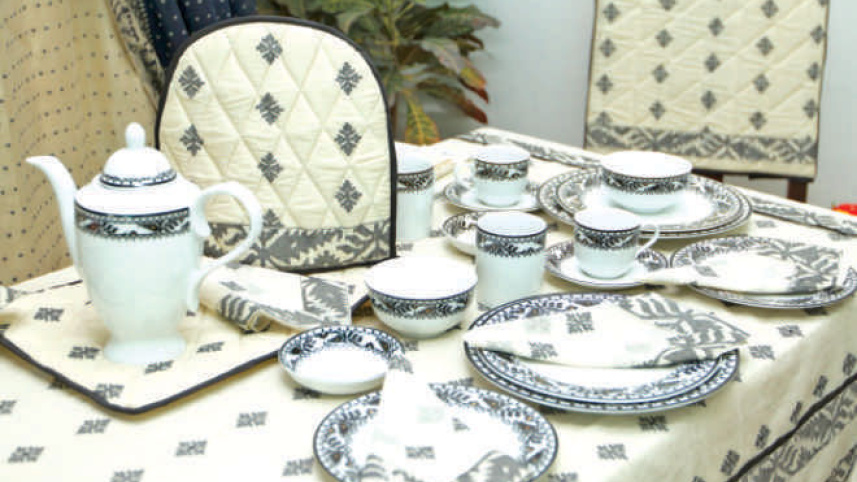
Jamdani is the figured, patterned version of fine muslin. The name derives from Persian jam (flower) and dani (vase). Using a discontinuous supplementary weft technique, weavers insert intricate floral, geometric and figurative motifs by hand while the cloth is still on the loom. The motifs appear to float on the transparent ground.
Centres of excellence remain in Narayanganj (especially Sonargaon, Rupganj and Siddhirganj). Jamdani reached its classical peak under Mughal patronage and was inscribed by UNESCO in 2013 as an Intangible Cultural Heritage of Humanity. Both jamdani and Dhaka muslin have received Geographical Indication (GI) status. Today it is woven both as traditional sarees and as contemporary fashion fabric, sustaining thousands of weaver families.
Jute: The Golden Fibre
Jute is Bangladesh’s most important commercial plant fibre and a major export. The soft, silky “golden fibre” has been cultivated in Bengal for centuries. Large-scale commercial production expanded in the 19th century. After independence, jute became a cornerstone of the national economy.
Beyond industrial sacks and carpet backing, a vibrant craft sector has developed since the late 1960s. Rural women produce shika (hanging nets and hammocks), bags, mats, wall hangings, dolls, jewellery and decorative items using traditional braiding, knotting and weaving techniques. Motifs such as kadam phool, mayur (peacock), jali (net) and fruit forms remain popular. Jute crafts combine ecological advantages with livelihood generation, especially for women.
-------------------
To be continued in Patreon.

0 comments:
Post a Comment