


Tariq ibn Ziyad: A Berber Conqueror's Rise and the Conquest of Al-Andalus
Tariq ibn Ziyad, a name etched in the annals of Islamic history, stands as a symbol of military prowess and the expansive reach of the Umayyad Caliphate. Born around 670 CE in North Africa, likely in the region of modern-day Algeria, Tariq met his end in Damascus around 720 CE. His life, though relatively short, was marked by extraordinary achievements, most notably leading the Muslim forces in the conquest of the Iberian Peninsula, which would become known as Al-Andalus. This conquest not only reshaped the political landscape of Europe but also facilitated a cultural flourishing that blended Islamic, Berber, and local traditions. Tariq's story is inextricably linked to his patron, Musa ibn Nusayr, under whose command he rose from humble origins to become a legendary general. To understand Tariq, one must delve into his Berber roots, his path from enslavement to freedom, his pivotal role in the invasion of Hispania, and the influential figure of Musa, whose own background as a Tabi'i added layers of religious and societal prestige.
The Berber Origins of Tariq ibn Ziyad
Tariq ibn Ziyad hailed from the Berber people, an indigenous ethnic group whose history in North Africa stretches back potentially 10,000 years or more. The Berbers, who self-identify as Imazighen—meaning "free people" or "noble men"—are the original inhabitants of the Maghreb region, predating the arrival of Arabs, Phoenicians, Romans, and other invaders. Archaeological evidence, including cave paintings in sites like Tassili n'Ajjer in Algeria and Tadrart Acacus in Libya, points to their presence during the Stone Age, with Neolithic societies emerging around 6000–2000 BCE. These early Berbers developed agriculture, domesticated animals, and formed complex communities, as seen in the Iberomaurusian culture around 15,000 years ago, which blended Near Eastern and African ancestries.
The Berbers' resilience is evident in their resistance to successive empires. Ancient Egyptian records from around 2000 BCE mention them as "Libyans" or "Temehu," and they established powerful kingdoms like Numidia under King Masinissa (c. 240–148 BCE) and Mauretania. They withstood Carthaginian, Roman, Vandal, and Byzantine rule, often retreating to mountainous strongholds like Kabylia to preserve their autonomy. By the 7th century CE, when Islam arrived, many Berbers converted, but they retained distinct cultural elements, including matrilineal traditions and a fierce sense of independence.
Tariq was born into the Nafza tribe, a Berber group associated with the broader Zenata confederation, native to the Tafna region near present-day Béni Saf and Tlemcen in Algeria. Some accounts also link him to the Ulhassa tribe, emphasizing his roots in the rugged landscapes of North Africa. The Berbers inhabited vast territories, including modern-day Morocco, Algeria, Tunisia, Libya, Niger, Mali, Burkina Faso, Mauritania, and even parts of Egypt (such as the Siwa Oasis). Today, their population numbers in the millions: 14–15 million in Morocco, 7–13 million in Algeria, and smaller communities elsewhere, with significant diasporas in Europe and North America.
The Berber language, part of the Afroasiatic family, includes varieties like Tamazight, Kabyle, Shilha, and Tamasheq (spoken by the nomadic Tuareg). Once widespread, these languages have faced decline due to Arabization policies post-Islamic conquests, incorporating up to 50% Arabic loanwords in some dialects. However, revival efforts have made Tamazight an official language in Morocco (2011) and Algeria (2016), with 14–16 million speakers today. In Tariq's era, Berber was the lingua franca of North Africa, and his tribal upbringing instilled in him the warrior ethos that would define his career.
Berber society was tribal and egalitarian, with clans like the Nafza emphasizing freedom and resistance to subjugation—traits that aligned with their self-designation as "free men." This cultural backdrop shaped Tariq, who, as a young man, navigated the turbulent world of the Umayyad expansions. The Berbers' conversion to Islam in the 7th century was rapid but often superficial at first, leading to revolts like the Great Berber Revolt of 740–743 CE. Yet, figures like Tariq exemplified successful integration, rising through military merit in the Arab-dominated caliphate.
From Enslavement to Freedom: Tariq's Early Life and Liberation
Tariq's path to prominence began in obscurity and hardship. Historical accounts describe him as a mawla—a term denoting a client or freed slave—of Musa ibn Nusayr, the Umayyad governor of Ifriqiya (encompassing modern Tunisia, eastern Algeria, and western Libya). The exact circumstances of his enslavement are murky, but it likely stemmed from intertribal conflicts or raids common in North Africa during the Umayyad conquests. Berbers, though increasingly Muslim, were often captured in battles against resistant tribes or Byzantine holdouts and integrated into the caliphate's military as auxiliaries.
As a slave under the Emir of Ifriqiya, Tariq served in the administrative and military apparatus. His talents caught the eye of Musa ibn Nusayr, who arrived as governor around 698 CE. Musa, recognizing Tariq's potential, freed him, making him a mawla bound by loyalty and clientage. This act of manumission was not uncommon in Islamic society, where freed slaves could ascend to high ranks through merit and conversion. Tariq's freedom elevated him from servitude to a position of trust, allowing him to command troops and govern territories.
Appointed governor of Tangier after its conquest in 710–711 CE, Tariq oversaw the westernmost fringes of Muslim North Africa. Tangier, a strategic port, bordered the unconquered Visigothic outpost of Ceuta, held by Count Julian. Julian's alliance with Tariq—motivated by revenge against Visigothic King Roderic, who allegedly raped Julian's daughter Florinda la Cava—provided the ships and intelligence needed for the Iberian crossing. This partnership underscores how personal vendettas intertwined with imperial ambitions, propelling Tariq from a freed slave to a conqueror.
Musa ibn Nusayr: The Architect of Conquest and a Tabi'i of Renown
To fully appreciate Tariq's story, one must examine Musa ibn Nusayr, his patron and superior. Born around 640 CE in Hebron or Kafarmara in Palestine/Syria, Musa came from an Arab background, with his father Nusayr linked to the Lakhmid clan or Banu Bakr confederation west of the Euphrates. Nusayr, possibly captured as a Christian Arab during the conquest of Ayn al-Tamr in 633 CE, converted and was freed, settling in Syria. Musa's birth coincided with the early Islamic expansions under Caliph Umar ibn al-Khattab (r. 634–644 CE), though as a child, he had no direct involvement.
Musa's status as a Tabi'i elevated his standing immensely. The Tabi'un (singular: Tabi'i) were the generation succeeding the Sahaba, the companions of Prophet Muhammad (peace be upon him). A Tabi'i is a Muslim who met at least one Sahabi, adhered to righteous guidance, and died in faith. They are revered in Sunni Islam as the second-best generation, per the Prophet's hadith: "The best people are those living in my generation, then those coming after them." The Tabi'un transmitted hadith, jurisprudence, and traditions, preserving Islam's core amid rapid growth.
The Taba' at-Tabi'in, the followers of the Tabi'un, formed the third generation, neither meeting the Prophet nor his companions but learning indirectly. Together with the Sahaba and Tabi'un, they constitute the salaf (pious predecessors), embodying piety and scholarship. Musa's learning from Sahaba disciples conferred trustworthiness, making him a respected figure in Islamic society—reliable in religious knowledge and leadership. This prestige bolstered his military endeavors, as caliphs trusted him with frontier commands.
Musa's career began under Caliph Abd al-Malik (r. 685–705 CE). After a stint as co-governor of Iraq marred by financial scandals—resolved by a ransom paid by his father's former patron—he was appointed governor of Ifriqiya in 698 CE. There, he completed the conquest of North Africa, capturing Tangier, the Sous valley, and building a navy to seize the Balearic Islands and Sardinia. His governance integrated Berber converts, like Tariq, into the army, fostering loyalty through shared faith and spoils.
Musa's relationship with Tariq was that of mentor and commander. He appointed Tariq to Tangier, entrusting him with reconnaissance raids into Hispania. Their collaboration peaked in the Iberian conquest, though tensions arose over booty distribution, including a legendary golden table attributed to Solomon. Despite reported envy—Musa allegedly rebuked Tariq harshly—they reconciled, sharing credit for the victories.
The Conquest of Spain: Tariq's Legendary Campaign
The conquest of the Iberian Peninsula began in 711 CE, a watershed moment in medieval history. Encouraged by Count Julian's defection, Musa dispatched Tariq with 7,000 troops—mostly Berber converts, augmented by Arabs—across the Strait of Gibraltar. Landing on April 26, 711, at the mountain renamed Jabal Tariq (Gibraltar), Tariq famously ordered his ships burned, per later legends, to eliminate retreat and inspire resolve: "The enemy is before you, the sea behind you." Though first recorded centuries later by al-Idrisi, this act symbolizes the invaders' commitment.
Facing King Roderic's army of up to 100,000 (likely exaggerated), Tariq achieved a stunning victory at the Battle of Guadalete on July 19, 711, in the Guadalquivir valley. Roderic, a usurper amid Visigothic infighting, was killed, and his forces scattered. The Visigoths, a minority elite ruling over Hispano-Romans and Jews, faced internal dissent; many locals, burdened by taxes and serfdom, welcomed the Muslims as liberators.
Tariq divided his forces: one under Mughith al-Rumi captured Córdoba, another Granada, while he took Toledo, the Visigothic capital. Advancing north to Guadalajara and Astorga, he consolidated two-thirds of the peninsula within months. Jewish communities aided the conquerors, opening gates in cities like Toledo, in exchange for protection.
Musa arrived in 712 with 18,000 Arab troops, besieging Seville (three months) and Mérida. Reuniting with Tariq at Talavera, they subdued Lusitania, Galicia, and the Ebro valley, reaching Zaragoza, León, and the Bay of Biscay. Treaties like that with Theodemir in Murcia allowed local rulers to retain lands and faith in exchange for tribute (jizya) and loyalty, facilitating peaceful submissions.
By 714, most of Iberia was under Muslim control, with garrisons in key cities. Musa appointed his son Abd al-Aziz as governor in Seville, who married Roderic's widow Egilona. The conquest extended to Septimania in Gaul, capturing Barcelona and Narbonne by 719. However, northern mountainous regions like Asturias resisted, with Pelagius's victory at Covadonga in 722 marking the start of Christian reconquest.
Aftermath, Legacy, and Historical Significance
In 714, Caliph al-Walid I summoned Musa and Tariq to Damascus, where they presented spoils but faced scrutiny under successor Sulayman, who stripped Musa of rank due to complaints. Musa died around 716 during Hajj, while Tariq passed in 720, both in relative obscurity. Their legacies endured: Al-Andalus became a center of learning, with Córdoba's libraries and architecture reflecting Berber-Arab fusion.
Tariq's famous pre-battle speech, recorded by later historians like Ibn Khallikan, exhorted: "Men, where will you flee? The sea is behind you, the enemy before you... Fight for your religion!" His story appears in tales like One Thousand and One Nights, blending history with myth.
The conquest's success stemmed from Visigothic disunity, Berber tenacity, and Umayyad strategy. It introduced Islam to Europe, sparking centuries of cultural exchange. Ethnic tensions, like the Berber Revolt of 740, highlighted inequalities, but the era fostered advancements in science, philosophy, and agriculture.
Tariq and Musa's partnership exemplifies how freed slaves and pious leaders could reshape empires. From Berber tribesman to conqueror, Tariq's journey reflects the dynamic interplay of faith, ambition, and opportunity in early Islam. Their achievements, built on Musa's scholarly foundation as a Tabi'i, underscore the enduring respect for those generations in Islamic history.
Places to Visit in Spain Related to Tariq ibn Ziyad and Musa ibn Nusayr
Spain's Andalusia region preserves the legacy of the 711 CE conquest through stunning Moorish sites. These landmarks, built or influenced during the Umayyad era, offer visitors a tangible connection to the historical events led by Tariq and Musa.
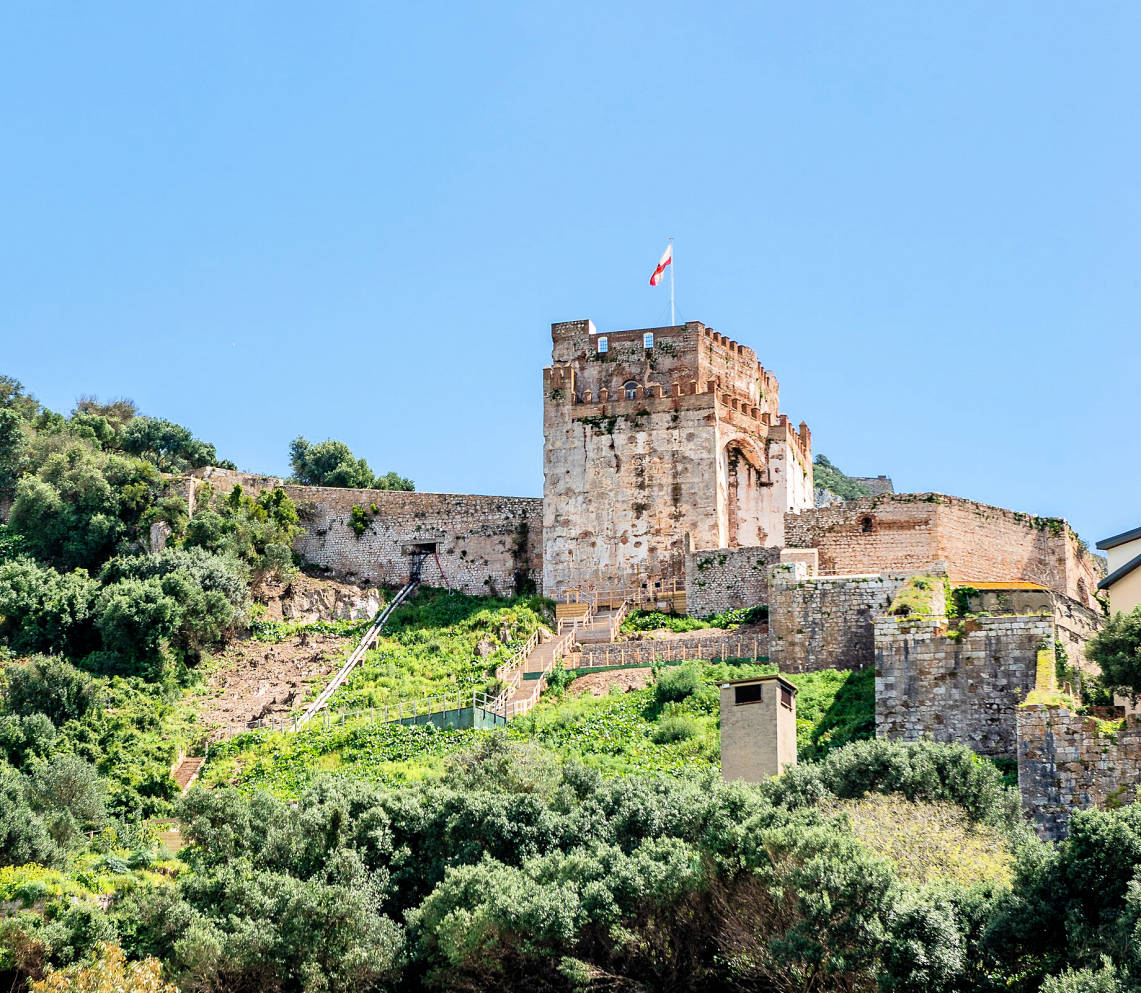
- Rock of Gibraltar (Jabal Tariq): This iconic limestone promontory marks Tariq's landing site in 711 CE. Named after him, it symbolizes the gateway to Europe for Muslim forces. Explore the Moorish Castle, including the Tower of Homage from the 8th century, and enjoy panoramic views of the strait. It's a UNESCO Biosphere Reserve, blending history with natural beauty.
- Alhambra, Granada: Though constructed later (13th–14th centuries) under the Nasrids, this palace-fortress represents the pinnacle of Al-Andalus culture initiated by the conquest. Tariq captured Granada, paving the way for Islamic rule. Wander the Nasrid Palaces, Generalife gardens, and Alcazaba fortress for insights into Moorish architecture and life.
- Mosque-Cathedral of Córdoba (Mezquita): Captured by Tariq's forces in 711, the site became the Great Mosque under Umayyad rule, expanded by Abd al-Rahman I in 785 CE. Its hypnotic arches and mihrab showcase early Islamic artistry. Now a cathedral, it embodies the cultural layers of the conquest.
- Alcázar of Seville: Musa besieged and captured Seville in 712 CE. The Alcázar, originally a Moorish fortress, was rebuilt in Mudéjar style but retains Umayyad roots. Visit the Patio de las Doncellas and lush gardens for a glimpse of royal life post-conquest.
- Toledo: Tariq seized the Visigothic capital in 711, marking a key victory. Explore the Cathedral (former Great Mosque) and the Alcázar for remnants of early Muslim influence amid medieval streets.
These sites, concentrated in Andalusia, are easily accessible by train or car, with guided tours enhancing historical context.
Places to Visit in Algeria Related to Tariq ibn Ziyad and Musa ibn Nusayr
Algeria's Maghreb heritage links directly to Tariq's origins and Musa's governorship of Ifriqiya, though fewer specific monuments survive from their era. Focus on western Algeria, particularly Tlemcen, associated with Tariq's Nafza/Ulhassa tribe.
- Great Mosque of Tlemcen: Built in 1082 CE by Almoravids, this mosque stands in Tariq's ancestral region near Wadi Tafna. It reflects the Islamic architecture that evolved from Umayyad conquests, with intricate arches and a historic minaret. Tlemcen, enriched by Berber-Islamic culture, was a center post-conquest.
- Citadelle et Palais El Mechouar, Tlemcen: This 12th-century fortress-palace, built by Zayyanids, overlooks Tariq's birthplace area. It symbolizes the fortified Berber strongholds Musa integrated. Explore the ramparts and museum for artifacts from the era.
- Mosquée Sidi Boumediene, Tlemcen: A 13th-century complex honoring a Sufi saint, it highlights the spiritual legacy of early Islamic North Africa under Musa. The madrasa and mausoleum offer serene views and cultural insights.
- Tipasa Roman Ruins: Near Algiers, this UNESCO site was part of areas conquered by Musa in 698–705 CE. The Phoenician-Roman-Byzantine ruins, overlooking the Mediterranean, evoke the pre-Islamic landscape transformed by Umayyad rule.
- Kasbah of Algiers: A UNESCO Ottoman-era citadel with roots in Musa's Ifriqiya governance. Wander the labyrinthine streets for a sense of North African Islamic urban life.
These Algerian sites, while not direct monuments, connect to the Berber heartland and conquest paths. Travel by bus or train from Algiers to Tlemcen for an immersive experience.
(Word count: approximately 2,850)
0 comments:
Post a Comment