


The Muslim Poet from Bengal, might have won Nobel Prize
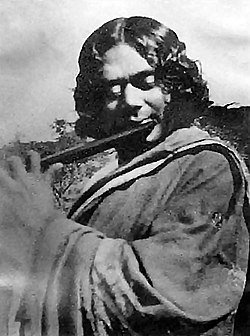
Nazrul The Rebel Poet’.
The name Tagore is well known,as Rabindranath Tagore a well known Poet who received Nobel Prize.
If you are wondering who he, Nazrul was a Bengali Muslim Poet. He was well known in Bengal as well as India.
Nazrul was from time of Rabindranath Tagore. Several years younger by age. Muslims in Bengal played prominent part in independence.
Why world not heard of Nazrul Islam?
Simple:
He was against British, Independence Of India
Nazrul was from a not so affluent family.
He was a Muslim. Not like he was very religious.
His poem The Rebel:
Say, Valiant,
Say: High is my head!
Looking at my head
Is cast down the great Himalayan peak!
Say, Valiant,
Say: Ripping apart the wide sky of the universe,
Leaving behind the moon, the sun, the planets
and the stars
Piercing the earth and the heavens,
Pushing through Almighty’s sacred seat
Have I risen,
I, the perennial wonder of mother-earth!
The angry God shines on my forehead
Like some royal victory’s gorgeous emblem.
Say, Valiant,
Ever high is my head!
I am irresponsible, cruel and arrogant,
I an the king of the great upheaval,
I am cyclone, I am destruction,
I am the great fear, the curse of the universe.
I have no mercy,
I grind all to pieces.
I am disorderly and lawless,
I trample under my feet all rules and discipline!
I am Durjati, I am the sudden tempest of ultimate summer,
I am the rebel, the rebel-son of mother-earth!
Say, Valiant,
Ever high is my head!
I am the hurricane, I am the cyclone
I destroy all that I found in the path!
I am the dance-intoxicated rhythm,
I dance at my own pleasure,
I am the unfettered joy of life!
I am Hambeer, I am Chhayanata, I am Hindole,
I am ever restless,
I caper and dance as I move!
I do whatever appeals to me, whenever I like,
I embrace the enemy and wrestle with death,
I am mad. I am the tornado!
I am pestilence, the great fear,
I am the death of all reigns of terror,
I am full of a warm restlessness for ever!
Say, Valiant,
Ever high is my head!
I am creation, I am destruction,
I am habitation, I am the grave-yard,
I am the end, the end of night!
I am the son of Indrani
With the moon in my head
And the sun on my temple
In one hand of mine is the tender flute
While in the other I hold the war bugle!
I am the Bedouin, I am the Chengis,
I salute none but me!
I am thunder,
I am Brahma’s sound in the sky and on the earth,
I am the mighty roar of Israfil’s bugle,
I am the great trident of Pinakpani,
I am the staff of the king of truth,
I am the Chakra and the great Shanka,
I am the mighty primordial shout!
I am Bishyamitra’s pupil, Durbasha the furious,
I am the fury of the wild fire,
I burn to ashes this universe!
I am the gay laughter of the generous heart,
I am the enemy of creation, the mighty terror!
I am the eclipse of the twelve suns,
I herald the final destruction!
Sometimes I am quiet and serene,
I am in a frenzy at other times,
I am the new youth of dawn,
I crush under my feet the vain glory of the Almighty!
I am the fury of typhoon,
I am the tumultuous roar of the ocean,
I am ever effluent and bright,
I trippingly flow like the gaily warbling brook.
I am the maiden’s dark glassy hair,
I am the spark of fire in her blazing eyes.
I am the tender love that lies
In the sixteen year old’s heart,
I am the happy beyond measure!
I am the pining soul of the lovesick,
I am the bitter tears in the widow’s heart,
I am the piteous sighs of the unlucky!
I am the pain and sorrow of all homeless sufferers,
i am the anguish of the insulted heart,
I am the burning pain and the madness of the jilted lover!
I am the unutterable grief,
I am the trembling first touch of the virgin,
I am the throbbing tenderness of her first stolen kiss.
I am the fleeting glace of the veiled beloved,
I am her constant surreptitious gaze.
I am the gay gripping young girl’s love,
I am the jingling music of her bangles!
I am the eternal-child, the adolescent of all times,
I am the shy village maiden frightened by her own budding youth.
I am the soothing breeze of the south,
I am the pensive gale of the east.
I am the deep solemn song sung by the wondering bard,
I am the soft music played on his lyre!
I am the harsh unquenched mid-day thirst,
I am the fierce blazing sun,
I am the softly trilling desert spring,
I am the cool shadowy greenery!
Maddened with an intense joy I rush onward,
I am insane! I am insane!
Suddenly I have come to know myself,
All the false barriers have crumbled today!
I am the rising, I am the fall,
I am consciousness in the unconscious soul,
I am the flag of triumph at the gate of the world,
I am the glorious sign of man’s victory,
Clapping my hands in exultation I rush like the hurricane,
Traversing the earth and the sky.
The mighty Borrak is the horse I ride.
It neighs impatiently, drunk with delight!
I am the burning volcano in the bosom of the earth,
I am the wild fire of the woods,
I am Hell’s mad terrific sea of wrath!
I ride on the wings of the lightning with joy and profound,
I scatter misery and fear all around,
I bring earth-quakes on this world!
I am Orpheus’s flute,
I bring sleep to the fevered world,
I make the heaving hells temple in fear and die.
I carry the message of revolt to the earth and the sky!
I am the mighty flood,
Sometimes I make the earth rich and fertile,
At another times I cause colossal damage.
I snatch from Bishnu’s bosom the two girls!
I am injustice, I am the shooting star,
I am Saturn, I am the fire of the comet,
I am the poisonous asp!
I am Chandi the headless, I am ruinous Warlord,
Sitting in the burning pit of Hell
I smile as the innocent flower!
I am the cruel axe of Parsurama,
I shall kill warriors
And bring peace and harmony in the universe!
I shall uproot this miserable earth effortlessly and with ease,
And create a new universe of joy and peace.
Weary of struggles, I, the great rebel,
Shall rest in quiet only when I find
The sky and the air free of the piteous groans of the oppressed.
Only when the battle fields are cleared of jingling bloody sabres
Shall I, weary of struggles, rest in quiet,
I the great rebel.
I am the rebel eternal,
I raise my head beyond this world,
High, ever erect and alone!
The original poem was in Bengali and published in 1921.
This was after his 1st marriage went in a different turn.
Short Biography of Kazi Nazrul Islam (Early Life)
Kazi Nazrul Islam, famously known as the Bidrohi Kobi (Rebel Poet) and National Poet of Bangladesh, was born on 24 May 1899 in the small village of Churulia, Asansol Sadar, Burdwan (Bardhaman) district, West Bengal, India (then Bengal Presidency under British rule).
He was born into a poor Bengali Muslim Kazi (Taluqdar) family. His father, Kazi Fakir Ahmed (also spelled Faqir Ahmed), was the imam (head) of the local village mosque and caretaker of a nearby mausoleum/shrine. His mother was Zaheda Khatun. Nazrul was the second of three sons and one daughter.
Surroundings & Childhood:
He grew up in extreme poverty in a rural village environment. After his father’s death in 1908 (when Nazrul was about 9–10 years old), he was nicknamed Dukhu Mia (“the sorrowful one”). Young Nazrul took over his father’s duties as muezzin (prayer caller), mosque caretaker, and helper at the local maktab (religious school). He received early religious education in Quran and Islamic teachings while facing constant financial hardship. The village surroundings — mosque, shrine, and folk culture — deeply influenced his early exposure to music, poetry, and performance.
This humble, struggling rural background shaped his lifelong spirit of rebellion against oppression and injustice.
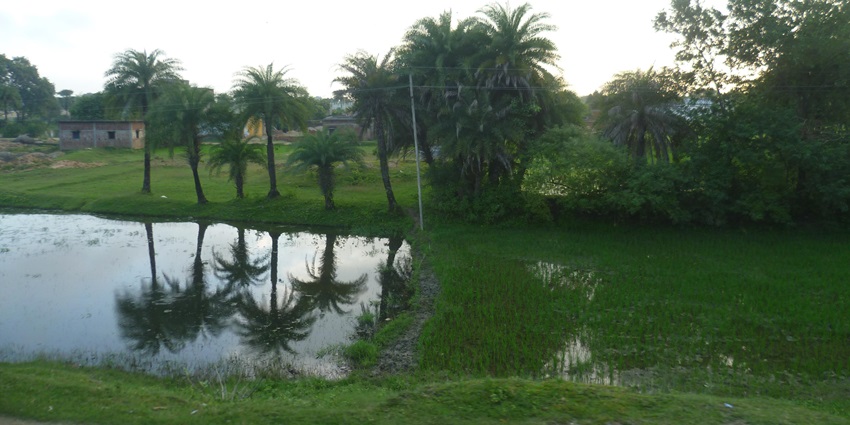
To understand the titan of literature who would later be known as the "Rebel Poet," you must first look past the legend and into the dust of a small village called Churulia. When you study the origins of Kazi Nazrul Islam, you are not merely looking at a biography; you are observing the forging of a temperament. Born on May 24, 1899, in the Burdwan district of Bengal, Nazrul entered a world where his family’s title—Kazi—suggested a lineage of prestige, but the reality of his household spoke of a crumbling socioeconomic structure.
If you want to grasp how a child becomes a revolutionary, you must start with the weight of expectation. Nazrul was born into a household defined by the traditional roles of a Bengali Muslim Taluqdar family. His father, Kazi Fakir Ahmed, was the caretaker of a local mausoleum and an imam. From his earliest breaths, Nazrul was surrounded by the scent of incense, the cadence of Quranic recitation, and the somber, rhythmic gravity of life at a dargah.
This was not a life of luxury; it was a life of service. The "Kazi" title held historical weight, yet it offered little protection against the encroaching poverty that defined the turn of the century in rural Bengal.
Consider the significance of his nickname: Dukhu Mian. In Bengali, "Dukhu" translates to "the sorrowful one" or "the sad one." It is rare for a parent to bestow such a name upon a child unless the reality of the home environment makes it impossible to ignore. This nickname was not a cruelty; it was an acknowledgment of their station. Poverty was the architect of his childhood.
When you examine the formative years of any great artist, you often find that their later work is a reaction to their earliest environment. For Nazrul, poverty was not a temporary state to be overcome; it was the lens through which he viewed justice, equity, and the human condition.
You might think that such early hardship would break a child’s spirit, but in Nazrul’s case, it acted as a catalyst. Because his family could not provide him with material security, he was forced to develop a profound sense of self-reliance at an age when most children are shielded from the mechanics of survival. He was the second of four children, a position that demanded both obedience to his elders and a quiet observation of the family’s waning resources.
The social landscape of Churulia in the late 1890s was one of complex intersections. It was a space where Islamic heritage and the vibrant, syncretic culture of rural Bengal collided. You should see his childhood home not just as a place of religious instruction, but as a crucible. The duties of his father—the care of the shrine, the leadership of the local mosque—taught Nazrul early on about the responsibility of public performance. He watched his father command a room, translate ancient texts into spiritual comfort for others, and navigate the social hierarchies of the village. These were the first lessons in the power of the spoken word.
-----
continued
Subscribe Facebook page
0 comments:
Post a Comment