


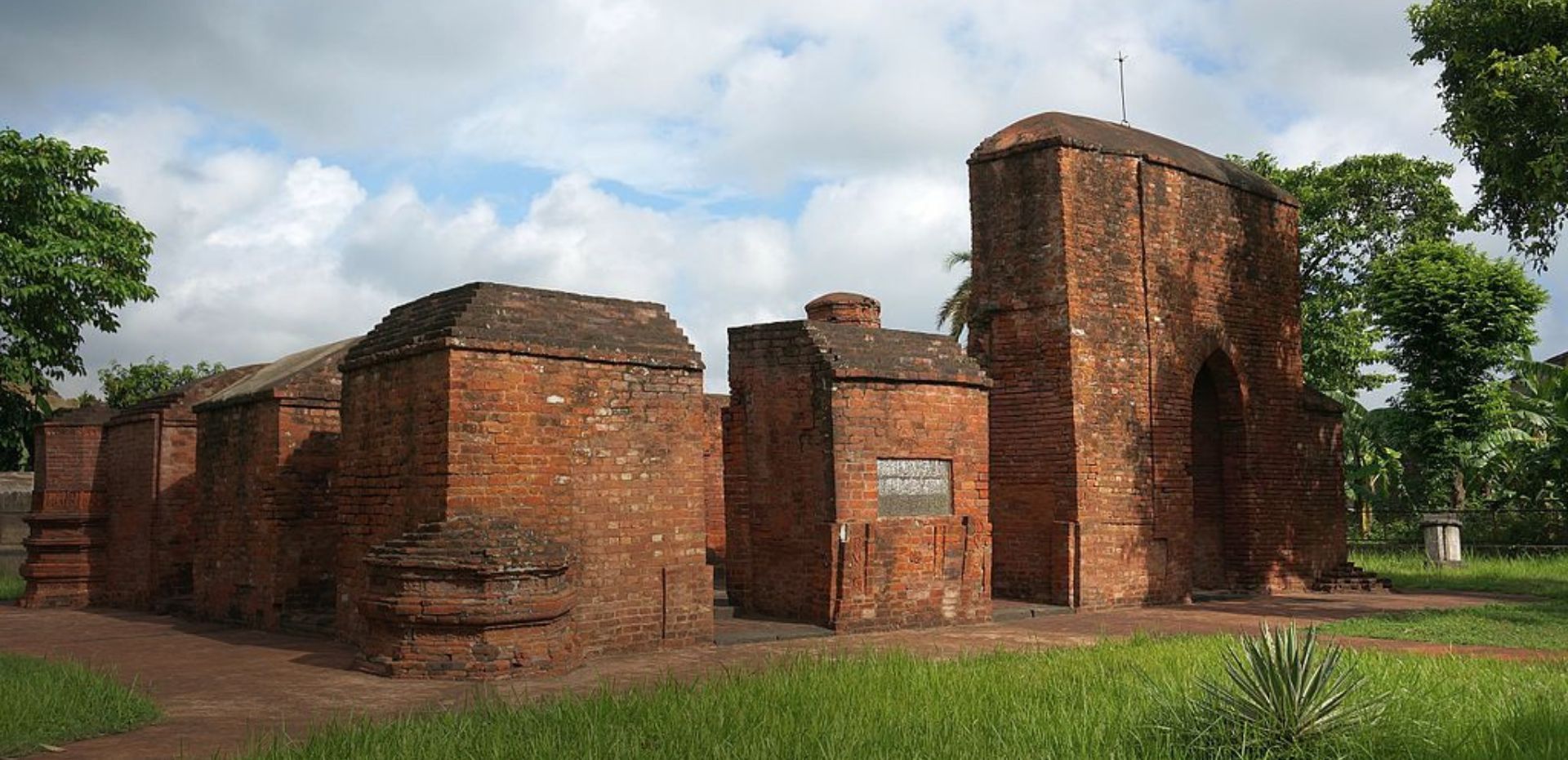
Saptagram, also known as Satgaon, was once one of the greatest cities and ports of Bengal. Long before Kolkata emerged as a commercial center, Saptagram stood as the principal gateway of Bengal to the Indian Ocean world. For several centuries, merchants from Arabia, Persia, China, Southeast Asia, and Europe sailed to its docks to trade in textiles, spices, sugar, and other valuable goods. Today, the city survives largely in historical records and local memory, but its role in shaping the economic and cultural history of Bengal remains immense.
Origins of Saptagram
The name "Saptagram" is derived from the Sanskrit words Sapta (seven) and Gram (villages), meaning "Seven Villages." According to local tradition, the city developed from a cluster of seven settlements situated along the banks of the Saraswati River, a major distributary of the Ganges in medieval Bengal.
Ancient legends connect the region to the story of King Priyavrata's seven sons mentioned in Hindu Puranic literature. While these stories belong more to mythology than history, they reflect the antiquity of the settlement and its importance in the imagination of Bengal's people.
The Legend of the Seven Brothers
According to local tradition, the name Saptagram ("Seven Villages") originated from seven brothers who were descendants of King Priyavrata.
Priyavrata was the son of Svayambhuva Manu and is described in the Bhagavata Purana and other Puranic texts as a righteous ruler who divided the world among his descendants.
The Bengal tradition states that seven princes or sages descended from Priyavrata came to the banks of the sacred Saraswati River in Bengal. Seeking spiritual enlightenment, they settled in seven neighboring villages and performed austerities, meditation, and religious rites.
The seven settlements were said to be:
1.Bansberia
2.Basudebpur
3.Krishnapur
4.Nityanandapur
5.Shivpur
6.Saptagram
7.Sankhanagar
The fertile lands surrounding Saptagram were inhabited from ancient times. Archaeological discoveries indicate human settlement in the region for over two thousand years. Due to its location along important river routes, the area naturally evolved into a center of agriculture and commerce.
Saptagram in Ancient Bengal
During the ancient period, Bengal was divided into several regions, including Vanga, Gauda, Pundra, and Samatata. The Saptagram area formed part of the western deltaic zone connected to the kingdom of Gauda.
The rise of river-based trade transformed the region. Bengal's rivers functioned as natural highways connecting inland settlements with the Bay of Bengal. Agricultural products, forest resources, and manufactured goods could easily be transported through the extensive river network.
By the Gupta period (4th–6th centuries CE), Bengal had become integrated into long-distance trade networks stretching across India and beyond. Although direct references to Saptagram from this period are limited, the region's strategic location suggests that it already played a role in riverine commerce.
Growth Under Early Medieval Kingdoms
Following the decline of the Gupta Empire, Bengal came under various regional dynasties, including the Palas and Senas.
The Pala Empire (8th–12th centuries) encouraged trade and maintained contacts with Southeast Asia. Buddhist monks and merchants traveled through Bengal's ports, helping spread cultural and commercial connections across the Bay of Bengal.
Under the Sena rulers, especially during the reign of Ballala Sena and Lakshmana Sena, western Bengal experienced significant economic growth. River ports expanded, markets flourished, and trade with neighboring regions increased. Saptagram benefited from this favorable environment and gradually emerged as a major commercial center.
The Gangaridai in Greek Accounts
Among the earliest references to Bengal in Western literature are the accounts of Greek and Roman writers who described a powerful nation known as the Gangaridai (Gangaridae). Living in the fertile lands of the Ganges Delta, the Gangaridai occupied a special place in the imagination of the ancient world. Their wealth, military strength, and strategic location made them one of the most respected peoples of India in classical literature.
The first references to the Gangaridai emerged following the campaigns of Alexander the Great in the fourth century BCE. Although Alexander never entered Bengal, Greek historians recorded reports from soldiers, merchants, and local informants about the lands lying beyond the Ganges River. These reports spoke of a rich and powerful kingdom whose military resources were so formidable that they influenced the course of world history.
One of the most important Greek writers to mention the Gangaridai was Diodorus Siculus, writing in the first century BCE. He described the Gangaridai as a nation inhabiting the easternmost parts of India near the mouths of the Ganges. According to his account, the kingdom possessed a massive army supported by thousands of war elephants. These elephants were considered the most powerful military force in the ancient world. Diodorus wrote that the Gangaridai could deploy as many as 4,000 war elephants, a number that deeply impressed Greek readers.
“Among the southern countries the first under the Kaukasos (Caucasian mountain range) is India, a kingdom remarkable for its vast extent and the largeness of its population, for it is inhabited by very many nations, among which the greatest of all is that of the Gangaridai, against whom Alexander did not undertake an expedition, being deterred by the multitudes of their elephants. This region is separated from other India by the greatest river in those parts.”
-Diodorus Siculus
Greek sources claim that when Alexander's army reached the Hyphasis River (modern Beas River), his soldiers learned about the strength of the Gangaridai and their neighboring allies, the Prasii. Exhausted from years of campaigning and fearful of confronting such a powerful force, Alexander's troops reportedly refused to march further east. As a result, the Macedonian conqueror turned back, ending his eastward expansion. Whether the numbers reported by Greek writers were exaggerated remains debated, but the reputation of the Gangaridai was undoubtedly significant.
One of the most important Greek writers to mention the Gangaridai was Diodorus Siculus, writing in the first century BCE. He described the Gangaridai as a nation inhabiting the easternmost parts of India near the mouths of the Ganges. According to his account, the kingdom possessed a massive army supported by thousands of war elephants. These elephants were considered the most powerful military force in the ancient world. Diodorus wrote that the Gangaridai could deploy as many as 4,000 war elephants, a number that deeply impressed Greek readers.
Greek sources claim that when Alexander's army reached the Hyphasis River (modern Beas River), his soldiers learned about the strength of the Gangaridai and their neighboring allies, the Prasii. Exhausted from years of campaigning and fearful of confronting such a powerful force, Alexander's troops reportedly refused to march further east. As a result, the Macedonian conqueror turned back, ending his eastward expansion. Whether the numbers reported by Greek writers were exaggerated remains debated, but the reputation of the Gangaridai was undoubtedly significant.
The geographer Claudius Ptolemy, writing in the second century CE, provided additional information. He identified the Gangaridai as inhabitants of the Ganges Delta and referred to their capital as "Gange" or "Ganges Regia," meaning the "Royal City of the Ganges." Although historians continue to debate the exact location of this city, it demonstrates that the Greeks regarded the lower Ganges region as an important political and economic center.
The wealth of the Gangaridai was closely tied to the geography of Bengal. The fertile alluvial plains of the Ganges and Brahmaputra rivers produced abundant crops, while the extensive river network facilitated trade and transportation. Greek writers recognized the prosperity of the region and described it as one of the richest parts of India. Trade in textiles, agricultural products, and luxury goods likely contributed to this reputation.
Today, historians generally associate the Gangaridai with ancient Bengal, encompassing parts of modern Bangladesh and West Bengal. Although many details remain uncertain, Greek accounts provide valuable evidence that Bengal was already known internationally more than two thousand years ago. The stories of the Gangaridai reveal a land celebrated for its wealth, military power, and strategic importance—a legacy that would continue through later cities such as Gaur, Sonargaon, and Saptagram.
Bengal :The only place that stopped Alexander. the Great
Present Narshingdi is one of the identifications and no wonder people from here are intelligent, attractive and proud.
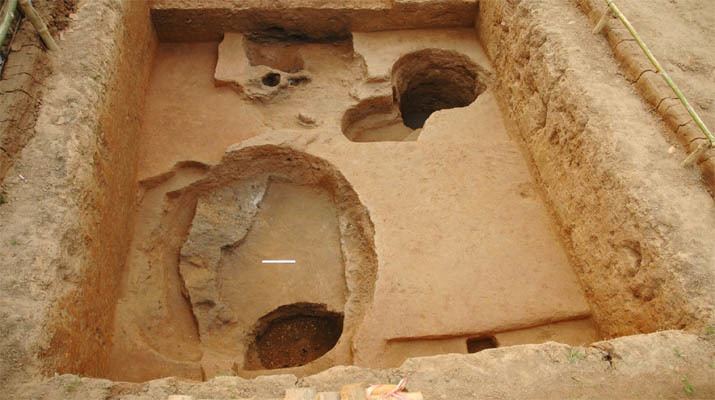
Chandraketugarh
Chandraketugarh – Current Location (2026)
Chandraketugarh is located in North 24 Parganas district, West Bengal, India. It is a cluster of archaeological mounds and villages, not a single large town.
Exact Location Details:
Village / Area: Berachampa (also spelled Berachamp or Deulia)
District: North 24 Parganas
Nearest Town: Barasat (about 15–20 km away)
Distance from Kolkata:
Straight-line / approximate: 35 km northeast
Road distance: 43–50 km (depending on route)
Geographic Coordinates:
22°41′52″N 88°41′18″E
How to Reach:
By Road: Via Barasat → Berachampa on the Barasat–Basirhat road.
By Train: Nearest station is Harua Road railway station (on the Barasat–Hasnabad line), then a short local ride or auto-rickshaw to the site (about 4–5 km).
The main mound (Khana Mihirer Dhipi / Chandraketu’s Fort) is situated near Berachampa Chowrasta.
It lies in the Ganges Delta region, historically on the banks of the ancient Bidyadhari River (a distributary of the Ganges), though the river has silted up significantly over the centuries.
0 comments:
Post a Comment